Legacy Impact
Impact That Rebuilds What Was Lost
Restoring Inter-generational wealth, rebuilding community identity, and creating economic pathways in Akron.
Restoring Inter-generational wealth, rebuilding community identity, and creating economic pathways in Akron.
Akron’s Black community helped build the city’s industries, neighborhoods, and cultural identity creating spaces of ownership, connection, and economic strength.
Over time, many of those spaces were removed through urban renewal and infrastructure development, displacing families, businesses, and community anchors that had defined Black Akron for generations.
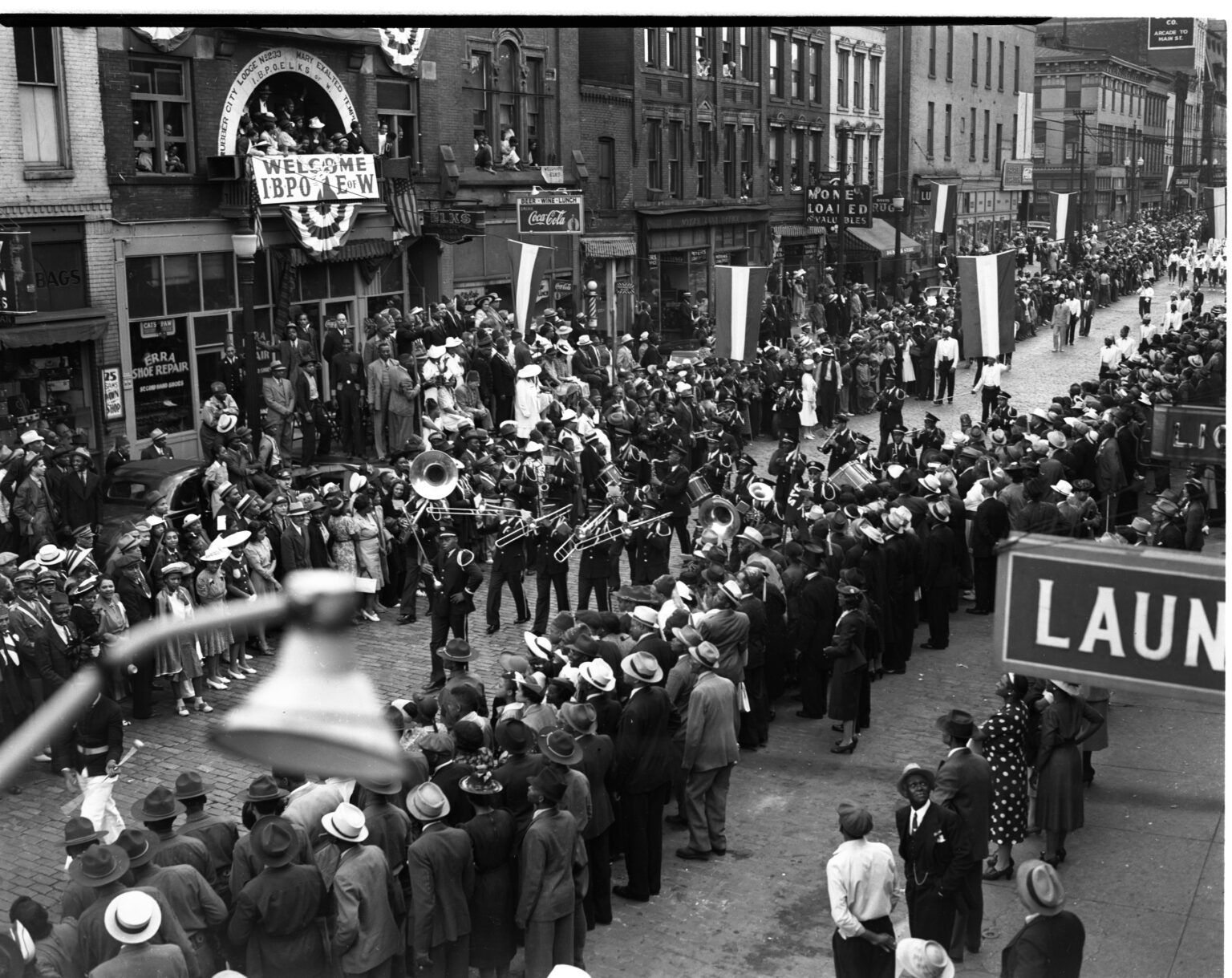


From a thriving cultural district on Howard Street to neighborhoods divided by highway construction, these images show what was built, what was removed, and what must now be restored.
Howard Street Parade (c. 1940) – The Horace and Evelyn Stewart Photograph Collection, University of Akron Archives. Innerbelt images – Akron Beacon Journal.
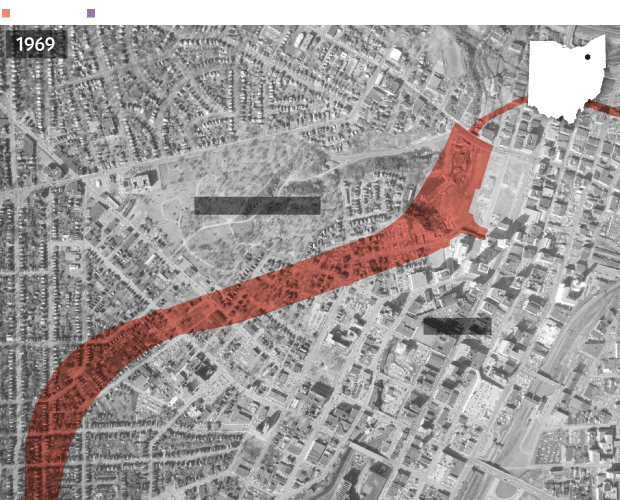
Sherbondy Hill — commonly known as Lane/Wooster — a thriving Black community with homes, businesses, churches, and cultural institutions.
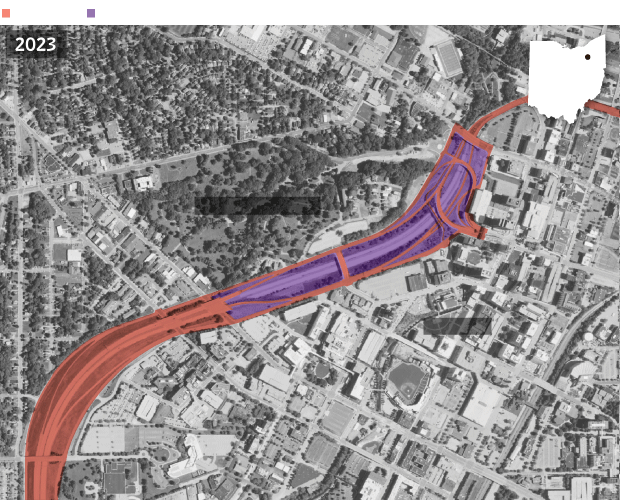
The red zone marks everything destroyed by Innerbelt construction — displacing generations of Black Akron families and erasing the economic and cultural center of the community.
What was lost was not just property. It was the infrastructure of a thriving community — the gathering places, the business corridors, and the institutions that passed wealth, identity, and culture from one generation to the next through Sherbondy Hill — commonly known as Lane/Wooster.
In 1969, Innerbelt highway construction carved through the heart of Black Akron. Homes were demolished. Businesses were shuttered. Churches were razed. The economic and cultural foundation of the community was dismantled — not by decline, but by design.
The Legacy Building Project exists to restore what was taken. Not to memorialize the past — but to rebuild the foundation that was stolen from it.
"This project is not about building a structure.
It is about restoring community."
This was not growth. It was removal.
The impact of the Innerbelt extended beyond a single corridor. From Howard Street once a thriving cultural and business district to neighborhoods along Wooster Avenue, entire communities were reshaped by highway construction.
Records from the Akron Department of Planning and Urban Renewal indicate that at least 737 households were displaced during the first phases of construction. However, those figures do not account for later phases completed in the 1980s.
At least 737 households were displaced. The true number is likely far greater.
Former city employees, residents, and historians agree that the true number of displaced families and businesses is likely significantly higher, representing not just physical loss but the disruption of generational stability, ownership, and community continuity.
Source: Akron Beacon Journal, “Akron Innerbelt history and racial inequity” View full article →
The Legacy Building Project exists as a direct response to that loss.
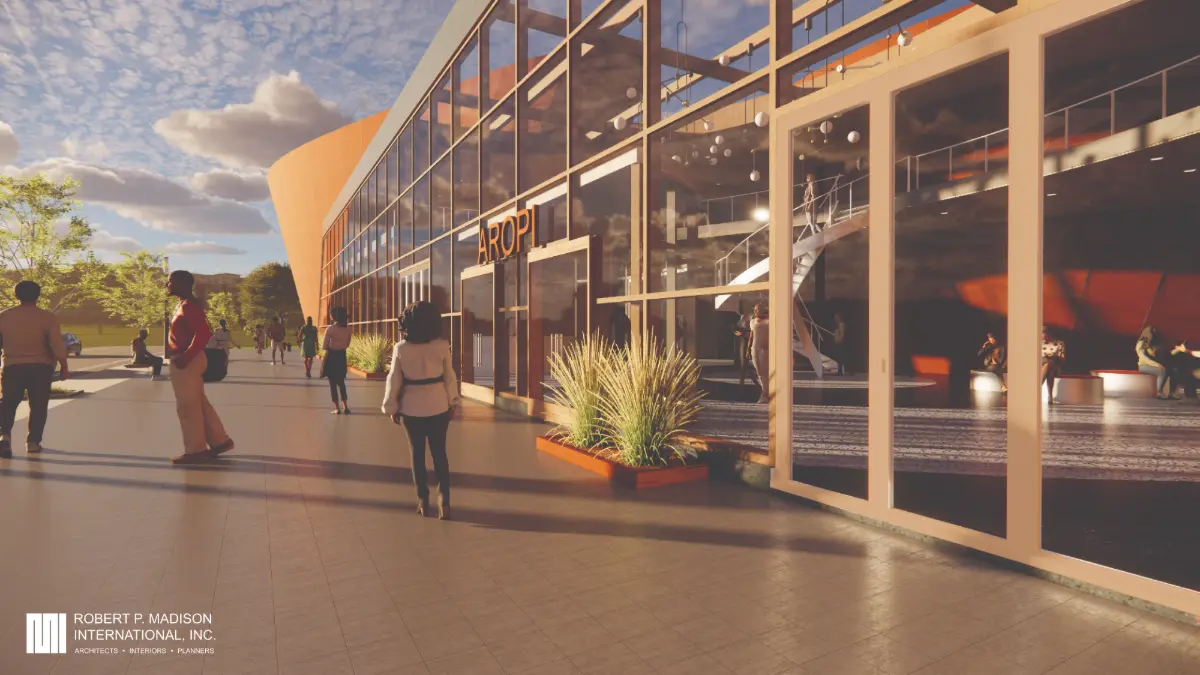
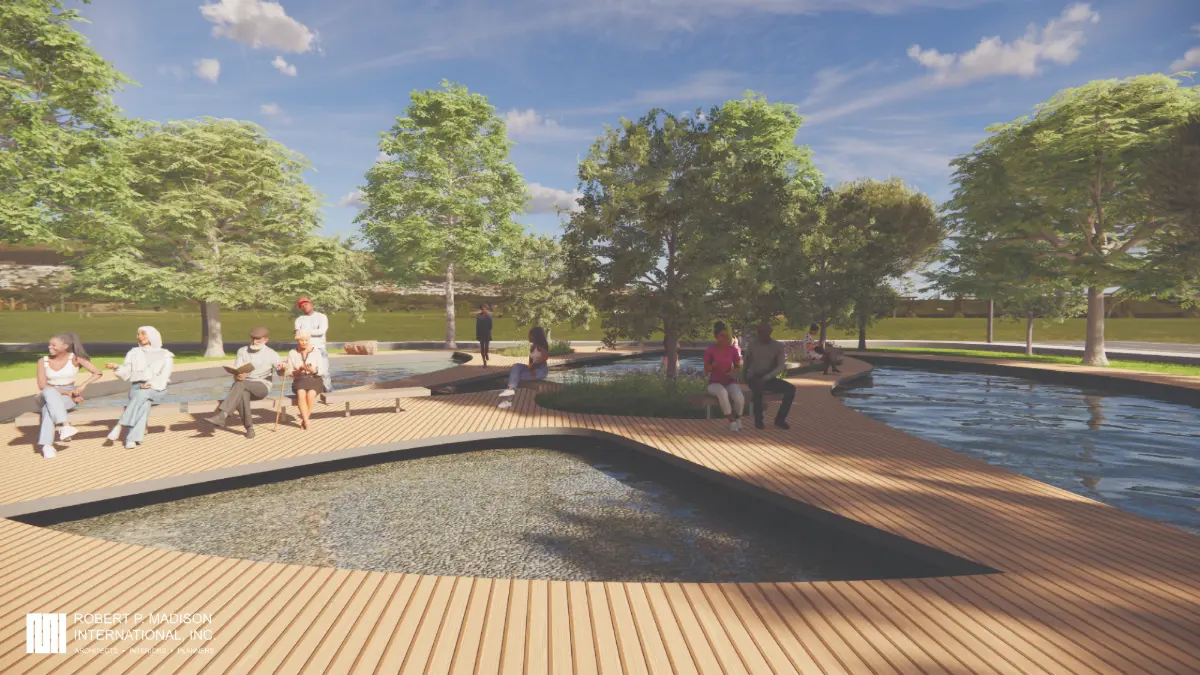
The Legacy Building Project restores presence, ownership, and opportunity in the same community where it was removed.
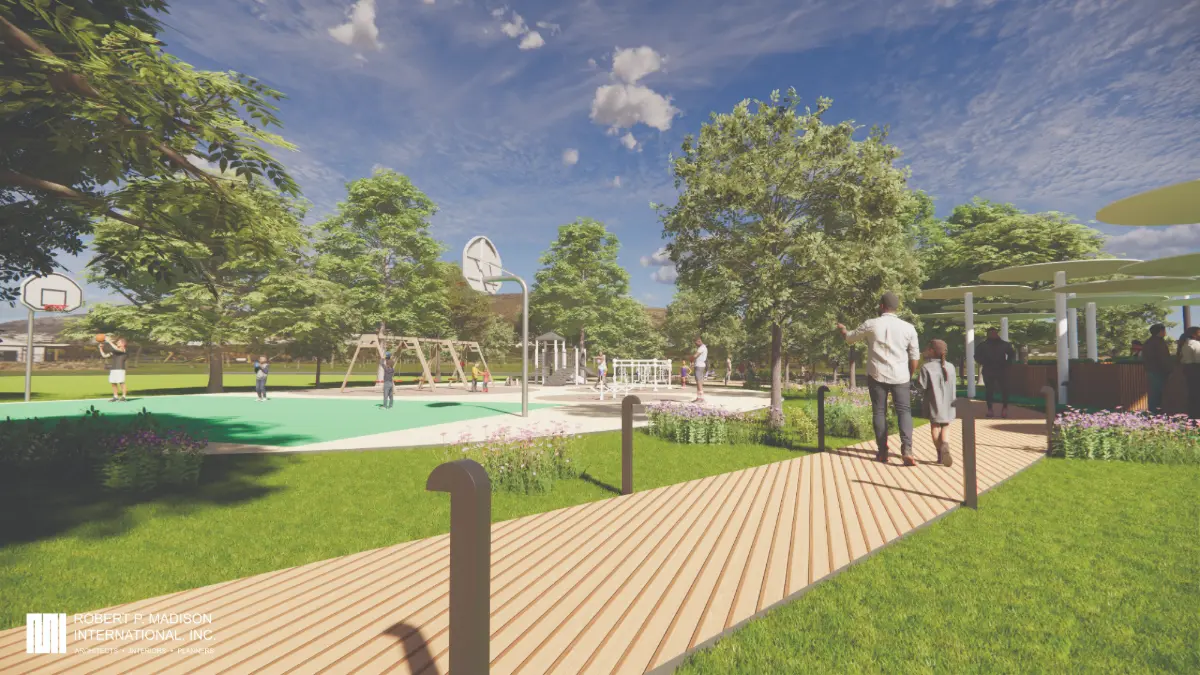
This project restores continuity by creating a permanent institution where history is preserved, shared, and expanded across generations.
The Legacy Building Project is designed as an innovation platform — supporting entrepreneurship, workforce development, and long-term economic growth.
Supporting business creation and economic mobility.
Preparing talent for emerging industries.
Connecting innovation with real-world opportunity.
We are currently securing founding partners to anchor the first phase of this project and establish a lasting cultural institution in Akron.
Supports youth programming, cultural workshops, and community engagement initiatives.
Funds program development, exhibits, and educational experiences that preserve and activate cultural history.
Helps build core infrastructure, innovation spaces, and long-term institutional capacity.